Character Introduction Storyboard Template
Introduce a character through environment, detail, action, and an iconic hero shot. A character introduction storyboard template for film and narrative.
What this template is for
Introduce a character through environment, detail, action, and presence.
When to use it
Best for
- character introductions
- protagonist reveals
- origin moments
9-panel sequence structure
| # | Shot | Purpose | Camera |
|---|---|---|---|
| 01 | Environment before subject | Establish the world before the character appears | Wide |
| 02 | Silhouette or partial reveal | Introduce mystery | Partial reveal |
| 03 | Costume or object detail | Hint at identity | Insert |
| 04 | First clear face | Reveal the character | Close-up |
| 05 | Action habit | Show behavior or routine | Medium |
| 06 | Reaction from others | Show how the world sees them | Reaction shot |
| 07 | Power or vulnerability beat | Reveal defining trait | Medium close-up |
| 08 | Iconic pose | Create memorable image | Hero shot |
| 09 | Story direction hint | Suggest where the character is headed | Wide / directional frame |
Establish the world before the character appears
Introduce mystery
Hint at identity
Reveal the character
Show behavior or routine
Show how the world sees them
Reveal defining trait
Create memorable image
Suggest where the character is headed
Your story
Describe your scene or story in one sentence. The prompt below updates in real time. Leave empty to use the example story.
Prompt preview
Create a square 3x3 2048x2048 storyboard grid as a cinematic storyboard infographic showing introduce a character through environment, detail, action, and presence: A retired boxer unlocks her small gym before sunrise. The sequence introduces her through the empty ring, taped hands, worn heavy bag, and the calm face of someone deciding whether to fight again.

Use dark moody high-end film stills, realistic lighting, subtle teal-and-amber color grade, shallow depth of field, atmospheric dust and shadows. Maintain consistent subject identity, wardrobe, location type, visual medium, lighting, and color palette across all panels. If a reference image is provided, use it as the visual anchor for the subject, world, and style; if no reference image is provided, synthesize one coherent world from the story.

Plan the 9 storyboard panels yourself from the story and the template rhythm, then render the final infographic. Story facts must not change: preserve the named relationship, setting, key object, reveal, cause, and emotional meaning from the story. Do not replace the story's key object with a different document, incident, crime, accident, or backstory.

Arrange the storyboard in a clean 3x3 grid with thin black borders. Each tile must have a large crop-safe cinematic image area and a separate dark information strip below it. The image area must contain no text, labels, captions, UI, watermarks, or typography. Put all written information only in the strip below each image.

Sequence rhythm: Environment → partial reveal → detail → face → action → reaction → hero shot

Use this template structure as the shot grammar, but adapt every panel to the concrete story:
1. Environment before subject (top-left) — Wide, 24mm. Purpose: Establish the world before the character appears. Suggested strip pattern: "SHOT 1 | ARRI Alexa Mini LF | 24mm | [write the concrete story beat you plan for this panel]"
2. Silhouette or partial reveal (top-center) — Partial reveal, 35mm. Purpose: Introduce mystery. Suggested strip pattern: "SHOT 2 | ARRI Alexa Mini LF | 35mm | [write the concrete story beat you plan for this panel]"
3. Costume or object detail (top-right) — Insert, 85mm. Purpose: Hint at identity. Suggested strip pattern: "SHOT 3 | ARRI Alexa Mini LF | 85mm | [write the concrete story beat you plan for this panel]"
4. First clear face (middle-left) — Close-up, 75mm. Purpose: Reveal the character. Suggested strip pattern: "SHOT 4 | ARRI Alexa Mini LF | 75mm | [write the concrete story beat you plan for this panel]"
5. Action habit (center) — Medium, 35mm. Purpose: Show behavior or routine. Suggested strip pattern: "SHOT 5 | ARRI Alexa Mini LF | 35mm | [write the concrete story beat you plan for this panel]"
6. Reaction from others (middle-right) — Reaction shot, 35mm. Purpose: Show how the world sees them. Suggested strip pattern: "SHOT 6 | ARRI Alexa Mini LF | 35mm | [write the concrete story beat you plan for this panel]"
7. Power or vulnerability beat (bottom-left) — Medium close-up, 75mm. Purpose: Reveal defining trait. Suggested strip pattern: "SHOT 7 | ARRI Alexa Mini LF | 75mm | [write the concrete story beat you plan for this panel]"
8. Iconic pose (bottom-center) — Hero shot, 35mm. Purpose: Create memorable image. Suggested strip pattern: "SHOT 8 | ARRI Alexa Mini LF | 35mm | [write the concrete story beat you plan for this panel]"
9. Story direction hint (bottom-right) — Wide / directional frame, 24mm. Purpose: Suggest where the character is headed. Suggested strip pattern: "SHOT 9 | ARRI Alexa Mini LF | 24mm | [write the concrete story beat you plan for this panel]"

Each information strip must show the planned panel title, shot metadata, and the concrete story beat in plain English. The strip text must include the story's key object and reveal where relevant, so the sequence cannot be mistaken for a different incident. Use clear numbered scene titles, compact metadata, and concise action subtitles in the information strips. Use plain text only: no emojis, no decorative symbols, no fake app UI text, and no real brand logos or copyrighted marks. Make each panel visually distinct through shot scale, camera angle, lens feeling, blocking, foreground/background layering, and subject movement. Exactly 9 panels, no extra panels, no merged panels, no duplicate compositions, no speech bubbles, no lorem ipsum, high-detail professional storyboard sheet.
Copy the prompt and paste it into ChatGPT along with your reference image to generate a storyboard sheet. chatgpt.com →
Related templates
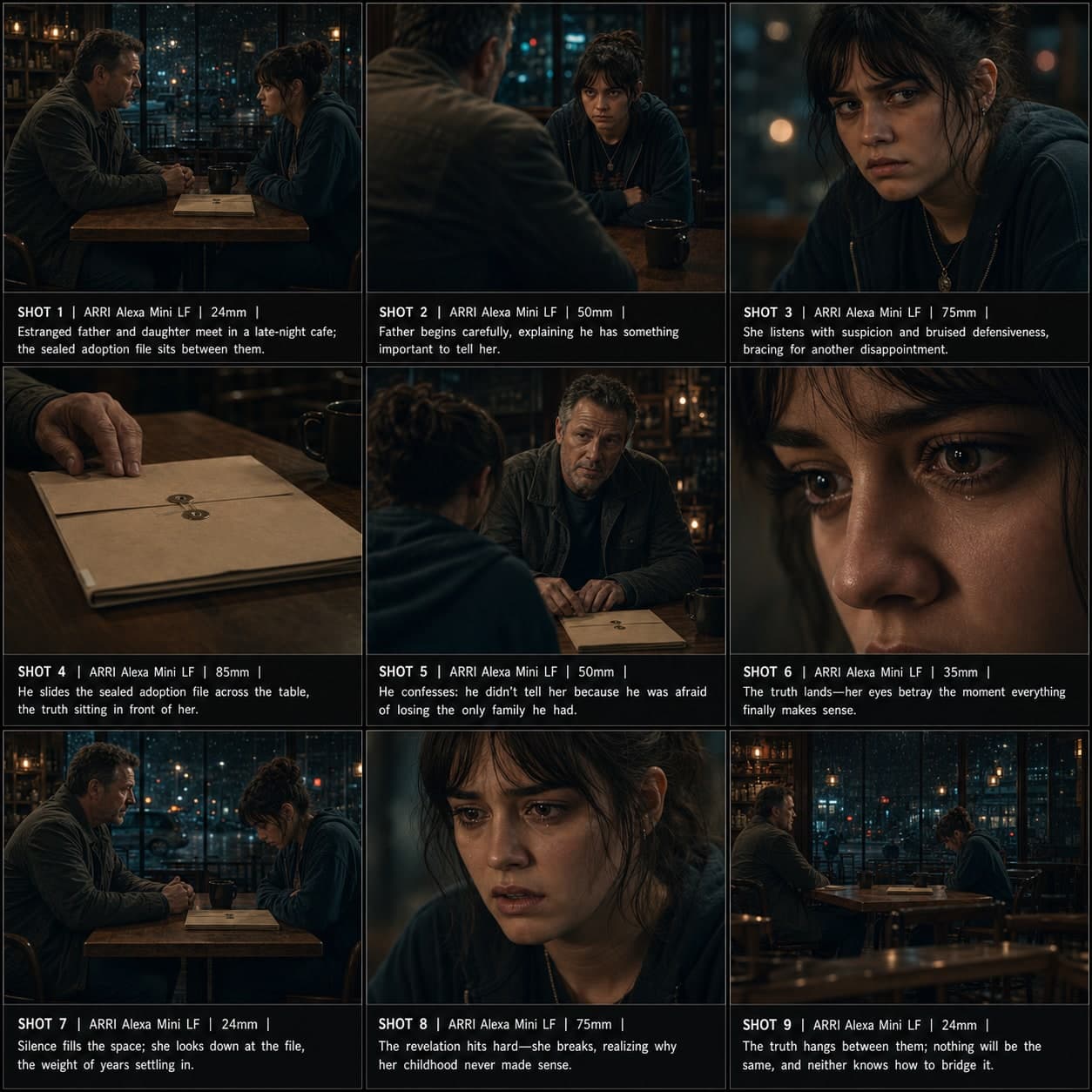 3×3
3×3Dialogue Reveal Storyboard Template
A 9-panel sequence for revealing a difficult truth through conversation, reaction, and silence. Ideal for dialogue-driven drama.
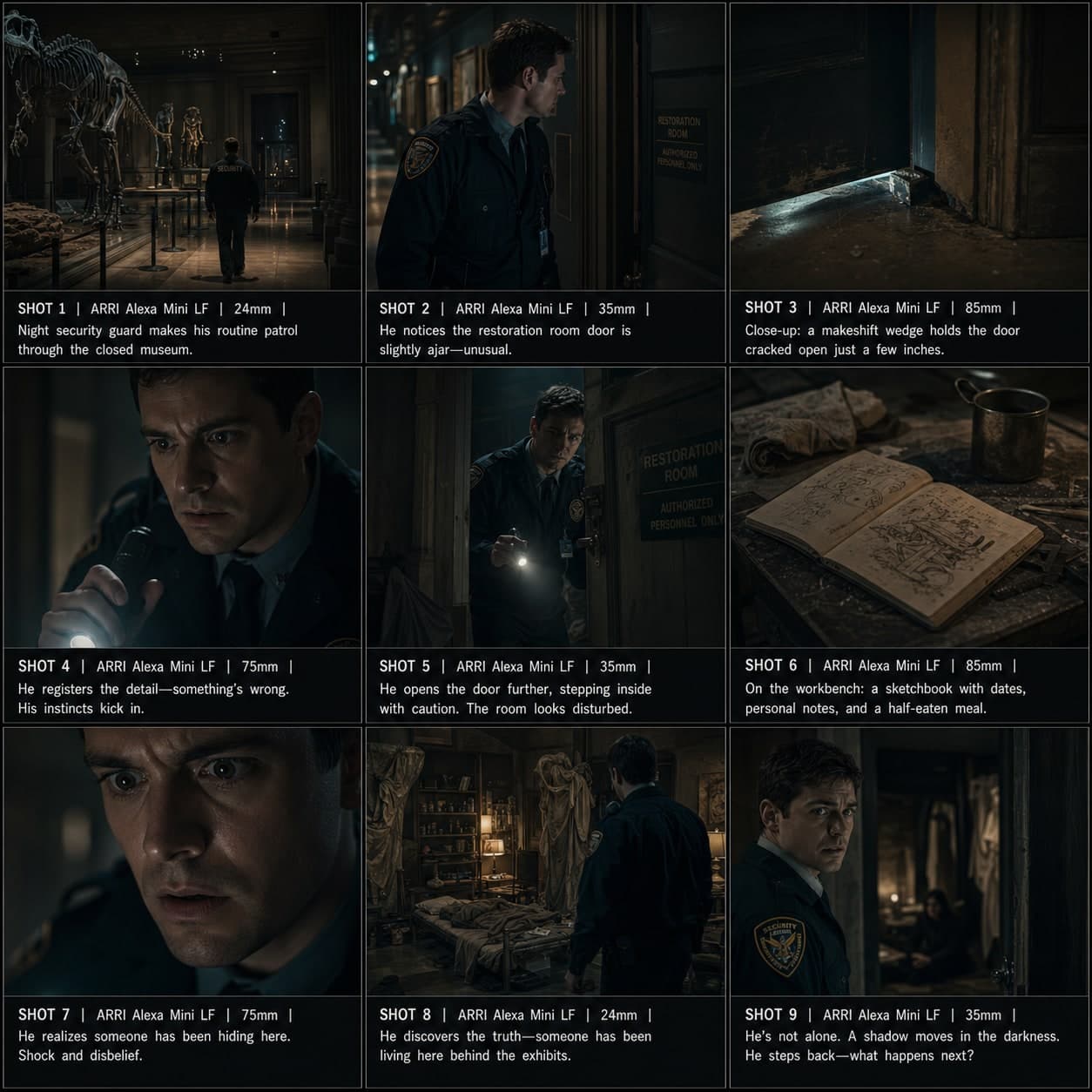 3×3
3×3Suspense Reveal Storyboard Template
Build tension toward a hidden truth with escalating pressure and an ambiguous ending. A suspense storyboard template for thriller and mystery scenes.
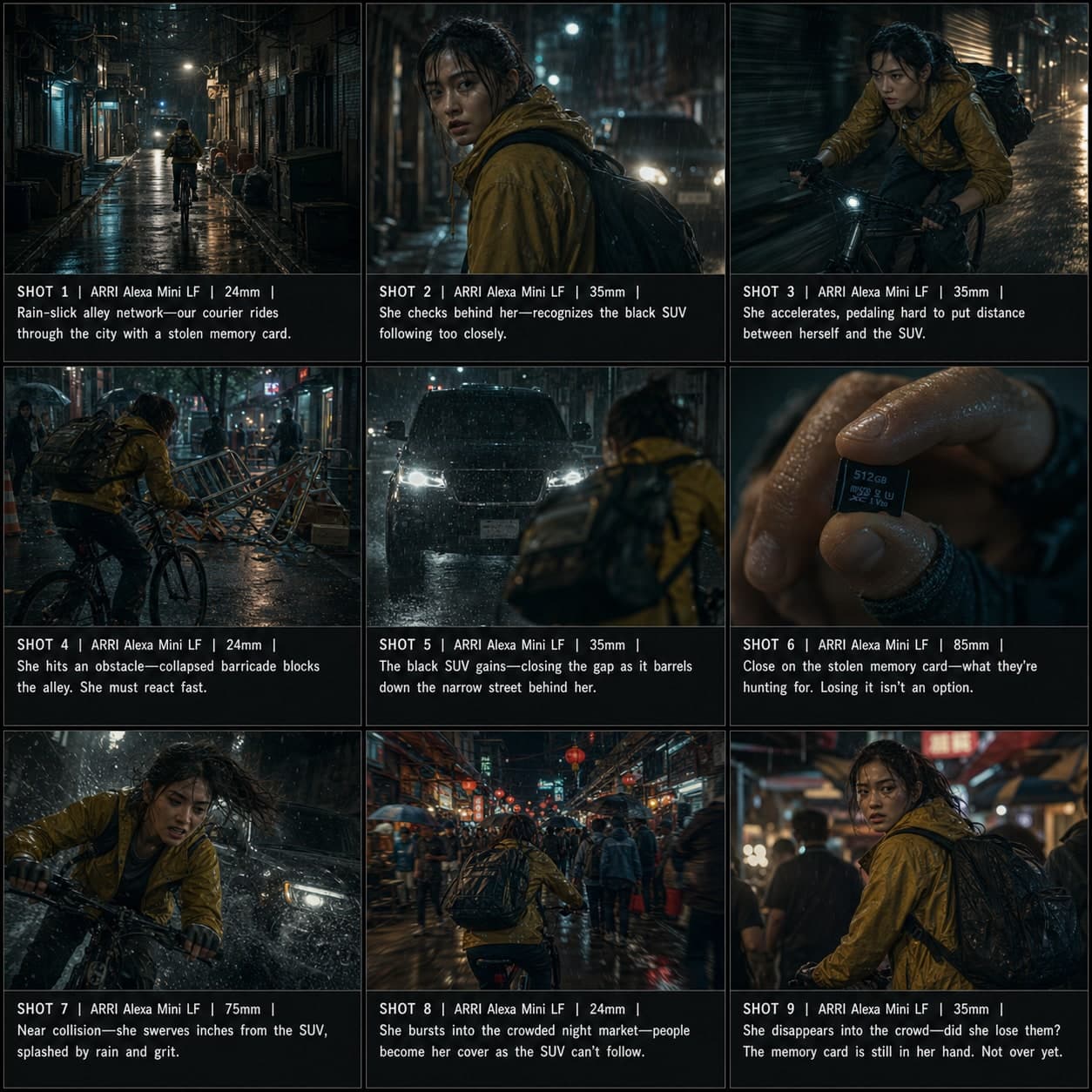 3×3
3×3Action / Chase Escalation Storyboard Template
Build a physical chase sequence from spatial setup through obstacle, pursuit, and escape. An action storyboard template for chase and movement scenes.
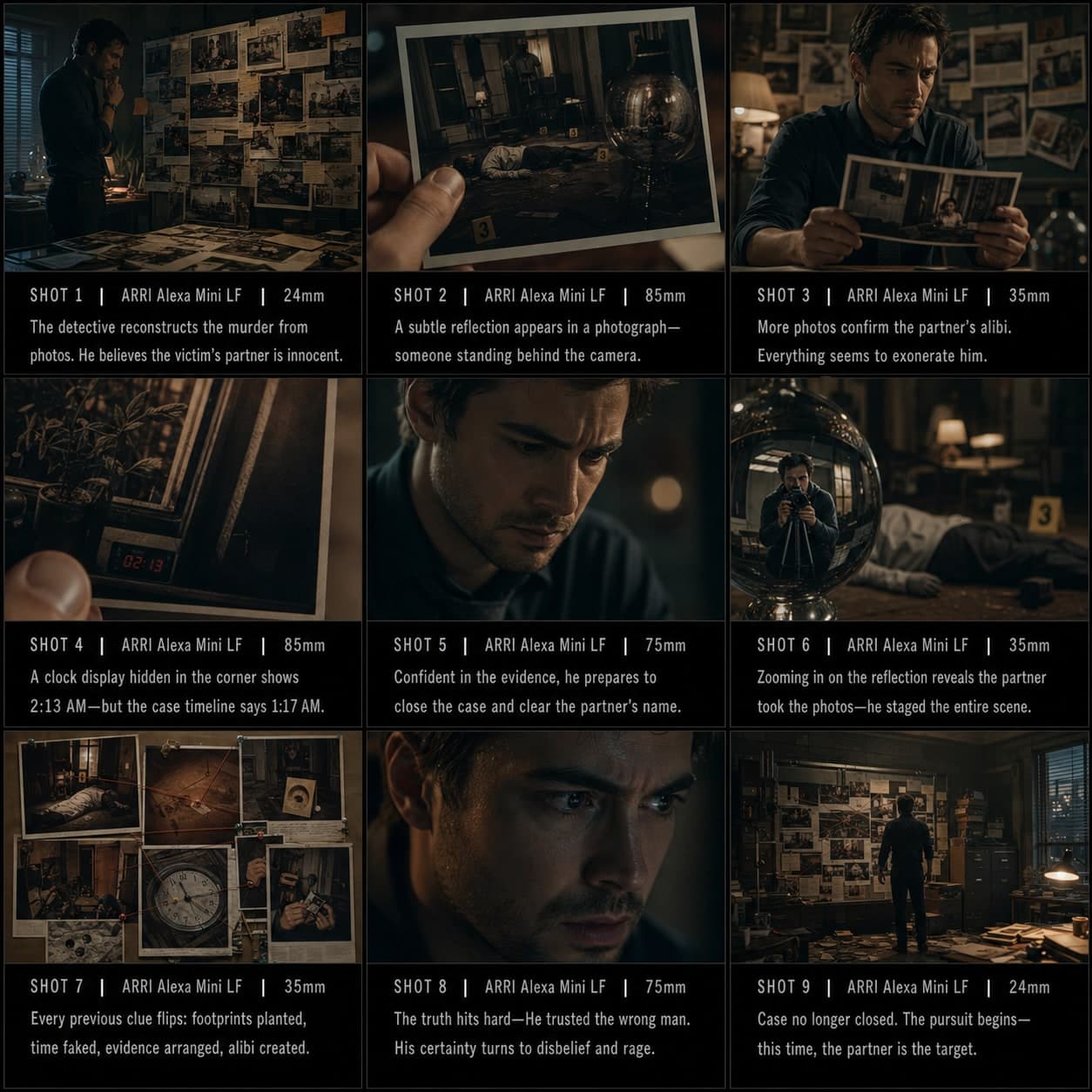 3×3
3×3Plot Twist Reveal Storyboard Template
Plant clues under a false assumption, then recontextualize everything with a dramatic twist. A 9-panel mystery reveal storyboard template for thrillers and suspense.