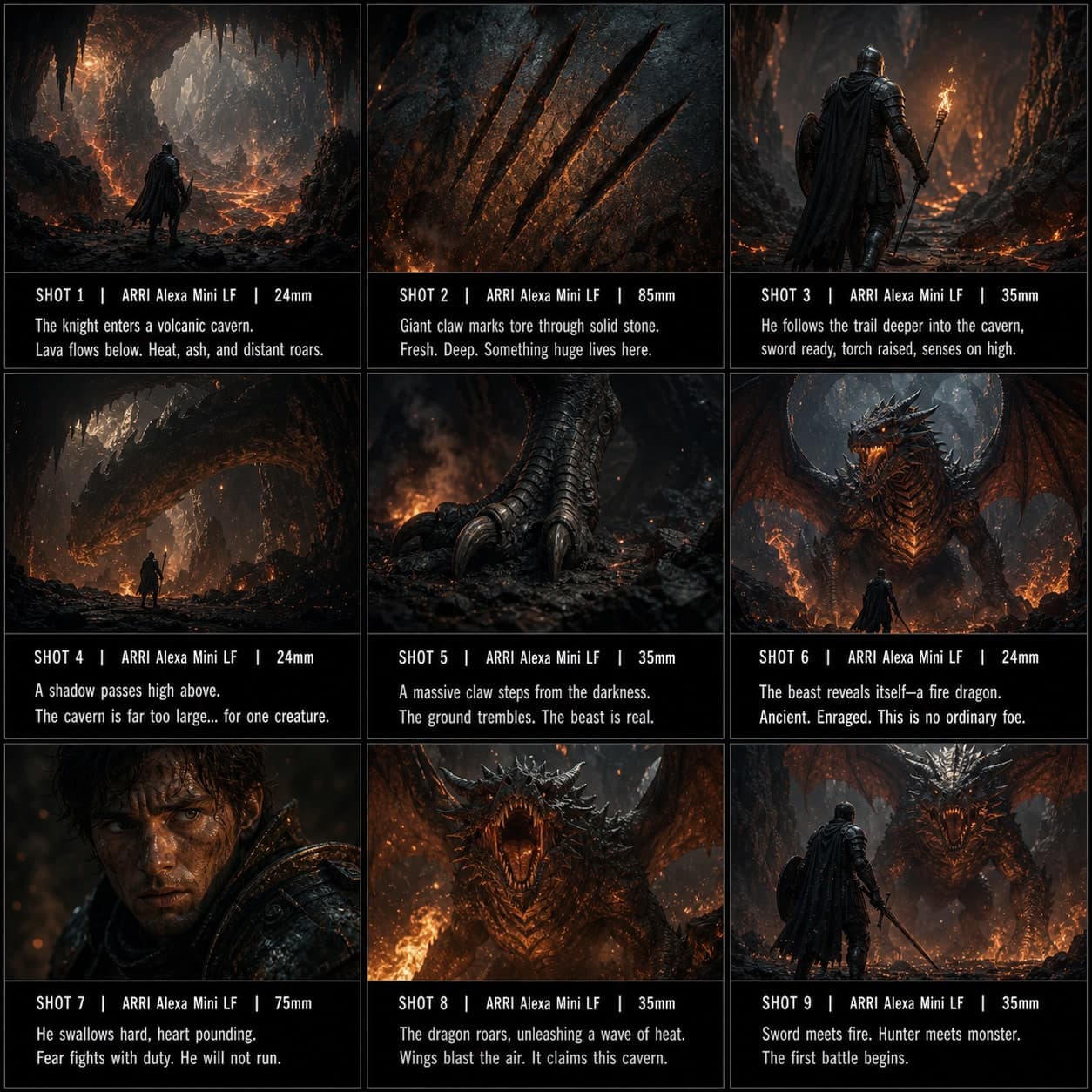
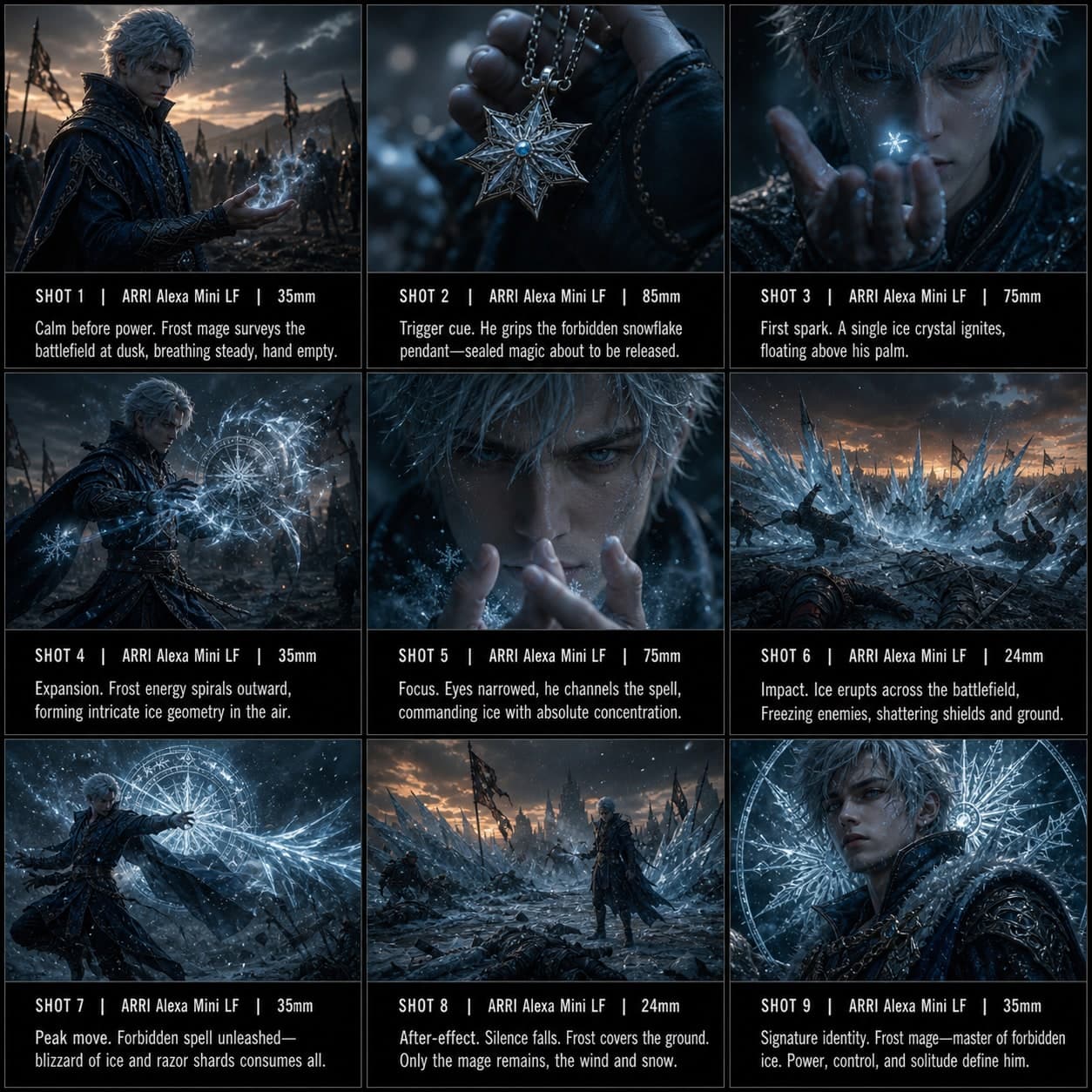
遊戲角色亮相分鏡模板
在電影級揭示中介紹帶有背景故事、態度和戰鬥身份的可玩角色。適用於預告的遊戲角色分鏡模板。
這個模板的用途
介紹一個帶有背景故事、態度和戰鬥身份的遊戲角色。
何時使用
適用於
- 遊戲角色介紹
- 可玩角色亮相
- 遊戲預告
9 格序列結構
| # | 鏡頭 | 目的 | 機位 |
|---|---|---|---|
| 01 | 世界建立 | 建立世界或環境 | 全景 |
| 02 | 環境威脅或任務線索 | 暗示衝突或目標 | 中全景 |
| 03 | 角色剪影 | 間接介紹角色 | 剪影鏡頭 |
| 04 | 裝備或武器細節 | 展示標誌性裝備 | 插入鏡頭 |
| 05 | 面部揭示 | 清晰揭示角色 | 特寫 |
| 06 | 能力暗示 | 展示獨特的力量或技能線索 | 動態中景 |
| 07 | 英雄動作節拍 | 展示運動或準備狀態 | 動作鏡頭 |
| 08 | 標誌性姿態 | 定格在標誌性英雄身份上 | 英雄姿態 |
| 09 | 戰役鉤子 | 暗示故事、任務或下一步 | 終幕故事鉤子 |
01世界建立
建立世界或環境
全景
02環境威脅或任務線索
暗示衝突或目標
中全景
03角色剪影
間接介紹角色
剪影鏡頭
04裝備或武器細節
展示標誌性裝備
插入鏡頭
05面部揭示
清晰揭示角色
特寫
06能力暗示
展示獨特的力量或技能線索
動態中景
07英雄動作節拍
展示運動或準備狀態
動作鏡頭
08標誌性姿態
定格在標誌性英雄身份上
英雄姿態
09戰役鉤子
暗示故事、任務或下一步
終幕故事鉤子
你的故事
用一句話描述你的場景或故事,下方 Prompt 會實時更新。留空則使用示例故事。
Prompt 預覽
Create a square 3x3 2048x2048 storyboard grid as a cinematic storyboard infographic showing introduce a game-like playable character with lore, attitude, and combat identity: In a flooded post-apocalyptic subway, a playable scavenger is introduced through world danger, silhouette, gear details, visor glow, a quick ability hint, and a final mission-ready pose.

Use dark moody high-end film stills, realistic lighting, subtle teal-and-amber color grade, shallow depth of field, atmospheric dust and shadows. Maintain consistent subject identity, wardrobe, location type, visual medium, lighting, and color palette across all panels. If a reference image is provided, use it as the visual anchor for the subject, world, and style; if no reference image is provided, synthesize one coherent world from the story.

Plan the 9 storyboard panels yourself from the story and the template rhythm, then render the final infographic. Story facts must not change: preserve the named relationship, setting, key object, reveal, cause, and emotional meaning from the story. Do not replace the story's key object with a different document, incident, crime, accident, or backstory.

Arrange the storyboard in a clean 3x3 grid with thin black borders. Each tile must have a large crop-safe cinematic image area and a separate dark information strip below it. The image area must contain no text, labels, captions, UI, watermarks, or typography. Put all written information only in the strip below each image.

Sequence rhythm: World setup → threat cue → character silhouette → gear detail → face reveal → ability hint → action beat → signature pose → campaign hook

Use this template structure as the shot grammar, but adapt every panel to the concrete story:
1. World setup (top-left) — Wide, 24mm. Purpose: Establish the world or environment. Suggested strip pattern: "SHOT 1 | ARRI Alexa Mini LF | 24mm | [write the concrete story beat you plan for this panel]"
2. Environmental threat or mission cue (top-center) — Medium wide, 24mm. Purpose: Hint at conflict or objective. Suggested strip pattern: "SHOT 2 | ARRI Alexa Mini LF | 24mm | [write the concrete story beat you plan for this panel]"
3. Character silhouette (top-right) — Silhouette shot, 35mm. Purpose: Introduce the character indirectly. Suggested strip pattern: "SHOT 3 | ARRI Alexa Mini LF | 35mm | [write the concrete story beat you plan for this panel]"
4. Gear or weapon detail (middle-left) — Insert, 85mm. Purpose: Show signature equipment. Suggested strip pattern: "SHOT 4 | ARRI Alexa Mini LF | 85mm | [write the concrete story beat you plan for this panel]"
5. Face reveal (center) — Close-up, 75mm. Purpose: Reveal the character clearly. Suggested strip pattern: "SHOT 5 | ARRI Alexa Mini LF | 75mm | [write the concrete story beat you plan for this panel]"
6. Ability hint (middle-right) — Dynamic medium, 35mm. Purpose: Show a unique power or skill cue. Suggested strip pattern: "SHOT 6 | ARRI Alexa Mini LF | 35mm | [write the concrete story beat you plan for this panel]"
7. Hero action beat (bottom-left) — Action shot, 35mm. Purpose: Show movement or readiness. Suggested strip pattern: "SHOT 7 | ARRI Alexa Mini LF | 35mm | [write the concrete story beat you plan for this panel]"
8. Signature pose (bottom-center) — Hero pose, 35mm. Purpose: Freeze on iconic hero identity. Suggested strip pattern: "SHOT 8 | ARRI Alexa Mini LF | 35mm | [write the concrete story beat you plan for this panel]"
9. Campaign hook (bottom-right) — Final story hook frame, 35mm. Purpose: Suggest story, mission, or next step. Suggested strip pattern: "SHOT 9 | ARRI Alexa Mini LF | 35mm | [write the concrete story beat you plan for this panel]"

Each information strip must show the planned panel title, shot metadata, and the concrete story beat in plain English. The strip text must include the story's key object and reveal where relevant, so the sequence cannot be mistaken for a different incident. Use clear numbered scene titles, compact metadata, and concise action subtitles in the information strips. Use plain text only: no emojis, no decorative symbols, no fake app UI text, and no real brand logos or copyrighted marks. Make each panel visually distinct through shot scale, camera angle, lens feeling, blocking, foreground/background layering, and subject movement. Exactly 9 panels, no extra panels, no merged panels, no duplicate compositions, no speech bubbles, no lorem ipsum, high-detail professional storyboard sheet.
複製 Prompt 後,連同參考圖貼上到 ChatGPT 即可生成分鏡表。 chatgpt.com →