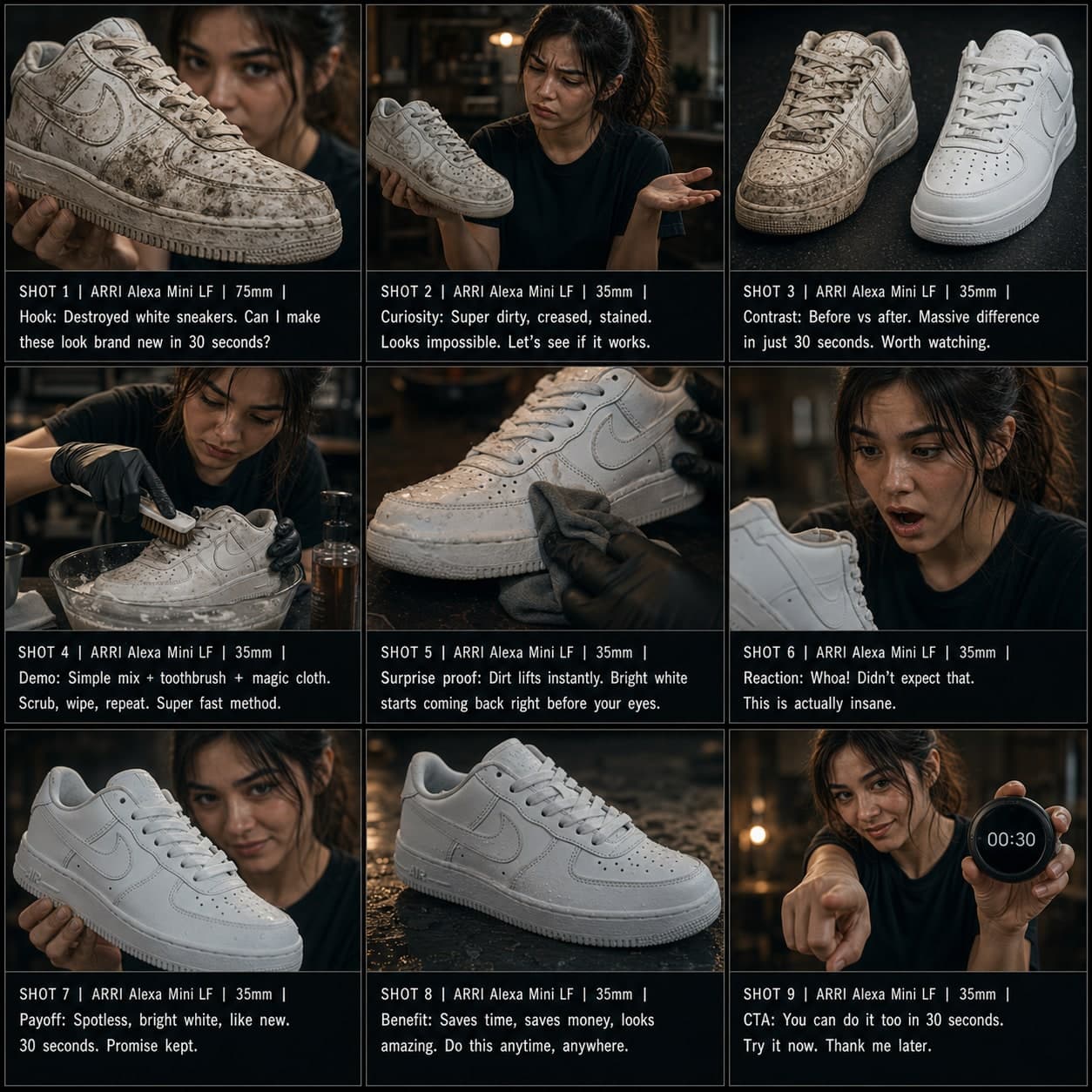
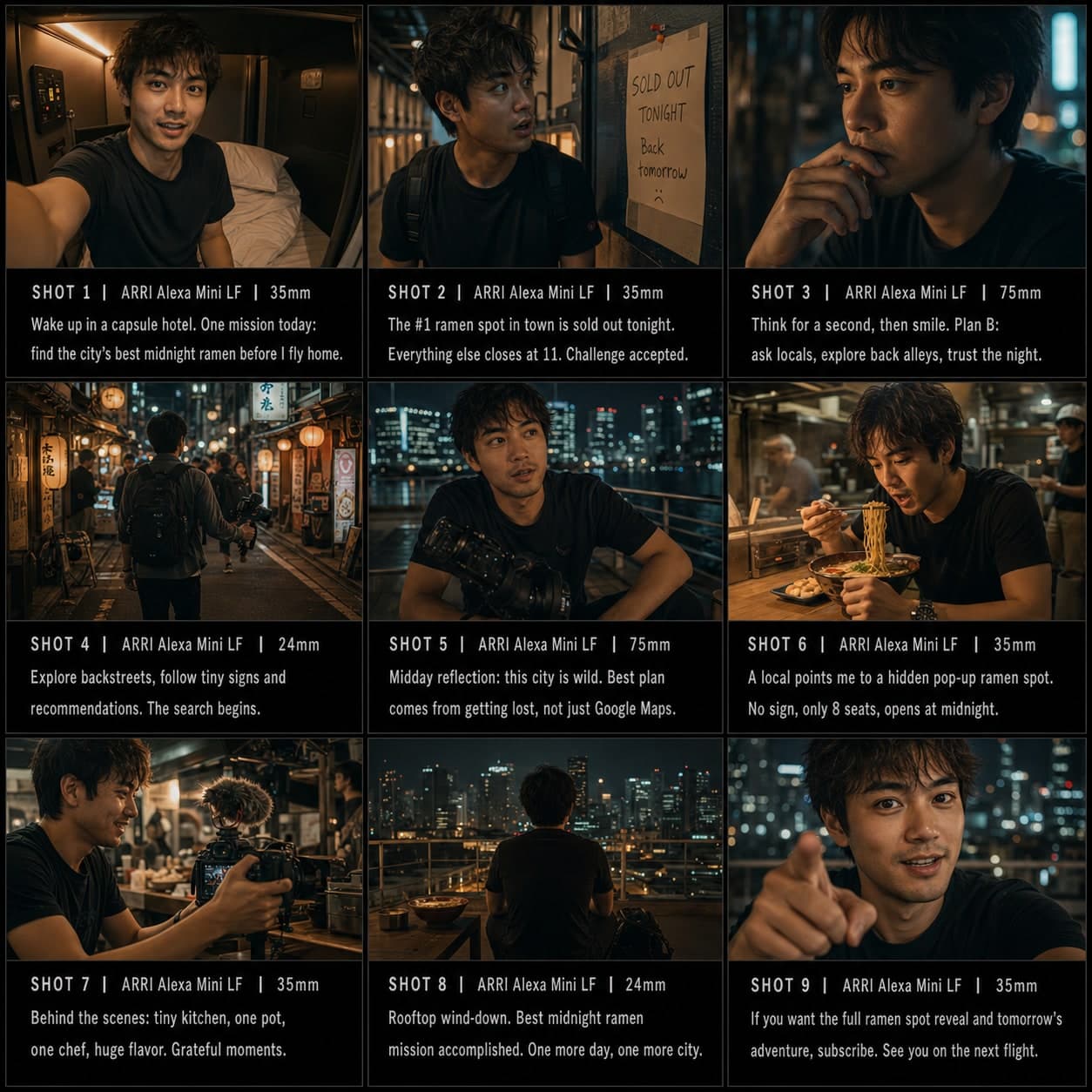
POV 場景分鏡模板
從第一人稱鉤子到反轉再到結尾,構建沉浸式場景。適用於沉浸式社交影片的 POV 場景分鏡模板。
這個模板的用途
構建第一人稱情境或角色扮演。
何時使用
適用於
- POV 內容
- 角色扮演場景
- 情境喜劇
9 格序列結構
| # | 鏡頭 | 目的 | 機位 |
|---|---|---|---|
| 01 | POV 鉤子 | 讓觀眾進入情境 | POV 畫面 |
| 02 | 情境建立 | 視覺化地解釋背景 | 全景 / 背景 |
| 03 | 意外事件 | 引入反轉 | 驚喜畫面 |
| 04 | 反應 | 展示即時回應 | 特寫 |
| 05 | 升級 | 提高stakes | 動態中景 |
| 06 | 選擇或反轉 | 新增決策點 | 插入 / 特寫 |
| 07 | 結果 | 展示發生了什麼 | 結果畫面 |
| 08 | 情感節拍 | 落地感受 | 反應鏡頭 |
| 09 | 結尾妙句 | 以笑話、反轉或餘韻結束 | 最終畫面 |
01POV 鉤子
讓觀眾進入情境
POV 畫面
02情境建立
視覺化地解釋背景
全景 / 背景
03意外事件
引入反轉
驚喜畫面
04反應
展示即時回應
特寫
05升級
提高stakes
動態中景
06選擇或反轉
新增決策點
插入 / 特寫
07結果
展示發生了什麼
結果畫面
08情感節拍
落地感受
反應鏡頭
09結尾妙句
以笑話、反轉或餘韻結束
最終畫面
你的故事
用一句話描述你的場景或故事,下方 Prompt 會實時更新。留空則使用示例故事。
Prompt 預覽
Create a square 3x3 2048x2048 storyboard grid as a cinematic storyboard infographic showing structure a first-person situation or roleplay: POV: you arrive at a tiny rental cabin and realize the host left a mysterious handwritten rulebook. The sequence uses first-person framing, discovery, reaction, escalation, a choice, and a final twist from your point of view.

Use dark moody high-end film stills, realistic lighting, subtle teal-and-amber color grade, shallow depth of field, atmospheric dust and shadows. Maintain consistent subject identity, wardrobe, location type, visual medium, lighting, and color palette across all panels. If a reference image is provided, use it as the visual anchor for the subject, world, and style; if no reference image is provided, synthesize one coherent world from the story.

Plan the 9 storyboard panels yourself from the story and the template rhythm, then render the final infographic. Story facts must not change: preserve the named relationship, setting, key object, reveal, cause, and emotional meaning from the story. Do not replace the story's key object with a different document, incident, crime, accident, or backstory.

Arrange the storyboard in a clean 3x3 grid with thin black borders. Each tile must have a large crop-safe cinematic image area and a separate dark information strip below it. The image area must contain no text, labels, captions, UI, watermarks, or typography. Put all written information only in the strip below each image.

Sequence rhythm: POV hook → context → unexpected event → reaction → escalation → twist → result → punchline

Use this template structure as the shot grammar, but adapt every panel to the concrete story:
1. POV hook (top-left) — POV frame, 35mm. Purpose: Put viewer inside situation. Suggested strip pattern: "SHOT 1 | ARRI Alexa Mini LF | 35mm | [write the concrete story beat you plan for this panel]"
2. Situation setup (top-center) — Wide / context, 24mm. Purpose: Explain context visually. Suggested strip pattern: "SHOT 2 | ARRI Alexa Mini LF | 24mm | [write the concrete story beat you plan for this panel]"
3. Unexpected event (top-right) — Surprise frame, 35mm. Purpose: Introduce twist. Suggested strip pattern: "SHOT 3 | ARRI Alexa Mini LF | 35mm | [write the concrete story beat you plan for this panel]"
4. Reaction (middle-left) — Close-up, 75mm. Purpose: Show immediate response. Suggested strip pattern: "SHOT 4 | ARRI Alexa Mini LF | 75mm | [write the concrete story beat you plan for this panel]"
5. Escalation (center) — Dynamic medium, 35mm. Purpose: Increase stakes. Suggested strip pattern: "SHOT 5 | ARRI Alexa Mini LF | 35mm | [write the concrete story beat you plan for this panel]"
6. Choice or twist (middle-right) — Insert / close-up, 85mm. Purpose: Add decision point. Suggested strip pattern: "SHOT 6 | ARRI Alexa Mini LF | 85mm | [write the concrete story beat you plan for this panel]"
7. Result (bottom-left) — Result frame, 35mm. Purpose: Show what happens. Suggested strip pattern: "SHOT 7 | ARRI Alexa Mini LF | 35mm | [write the concrete story beat you plan for this panel]"
8. Emotional beat (bottom-center) — Reaction shot, 35mm. Purpose: Land feeling. Suggested strip pattern: "SHOT 8 | ARRI Alexa Mini LF | 35mm | [write the concrete story beat you plan for this panel]"
9. End punch (bottom-right) — Final frame, 35mm. Purpose: Finish with joke, twist, or lingering beat. Suggested strip pattern: "SHOT 9 | ARRI Alexa Mini LF | 35mm | [write the concrete story beat you plan for this panel]"

Each information strip must show the planned panel title, shot metadata, and the concrete story beat in plain English. The strip text must include the story's key object and reveal where relevant, so the sequence cannot be mistaken for a different incident. Use clear numbered scene titles, compact metadata, and concise action subtitles in the information strips. Use plain text only: no emojis, no decorative symbols, no fake app UI text, and no real brand logos or copyrighted marks. Make each panel visually distinct through shot scale, camera angle, lens feeling, blocking, foreground/background layering, and subject movement. Exactly 9 panels, no extra panels, no merged panels, no duplicate compositions, no speech bubbles, no lorem ipsum, high-detail professional storyboard sheet.
複製 Prompt 後,連同參考圖貼上到 ChatGPT 即可生成分鏡表。 chatgpt.com →